Asador Extebarri

20120702-165619.jpg

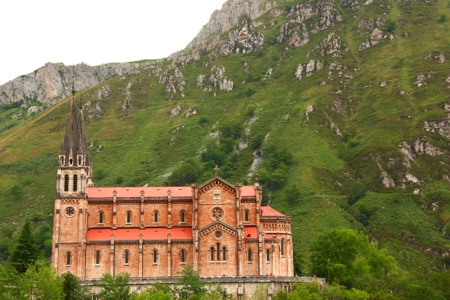
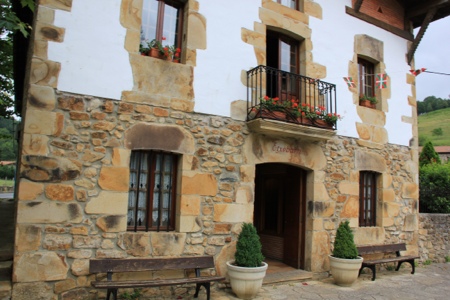
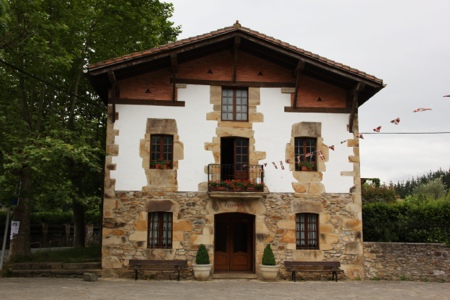
That humble facade hides a grill that does wonders. An asador is typically a rustic place with grilled local products – some veg, much meat, often local game and the local cider or txakoli. Not this asador. AB fans (Bourdain, not Brown), will recognize it – the little place in the Basque countryside, at the base of a granite mountain range, not near anything, but next to the church and across from the jai alai fronton, where the art of grilling has reached Michelin-star status. A place that caused Bourdain to exclaim “absolutely one of the best meals of my life.” That’s quite a statement, which is why (a) this place was definitely on my list of places to try, and (b) I was worried about going there. Those words of praise raise very high expectations – the kind of expectations I had in advance of visiting the French Laundry, the kinds of expectations usually only met in New York and Paris. Could a little place in really remote Spain pull it off? Let’s go in and try it out.

20120702-165825.jpg

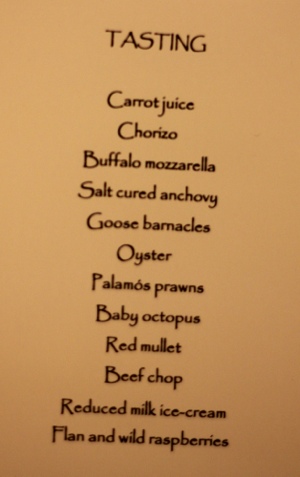
To understand the challenge, consider that each item is cooked over its own fire, the choice of coals (both wood composition and temperature) dependent on the dish. Everything comes from the fire, from the starter to the dessert, so concerns about over-smokiness are not unfounded. But here’s the secret to their success: everything, which on our visit included a great deal of seafood, is cooked perfectly. Perfectly. There is always enough smoke or char to ensure that you know the food was in contact with, or close proximity to, actual fire, but each item was done to perfection, even when that meant barely cooking, say, the oyster. What else did they serve, you wonder, perhaps salivating. This is the tasting menu which we followed, the al a carte portions being such that just the two of us could not have sampled enough variety to have made the trip worthwhile.
20120702-170416.jpg

Forks at the ready … dig in! (Sorry about the photos, as our table was a bit dark and the day a bit gloomy.)

20120702-170541.jpg

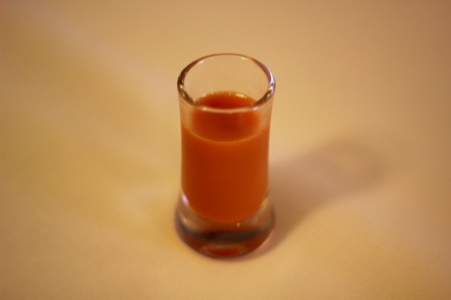
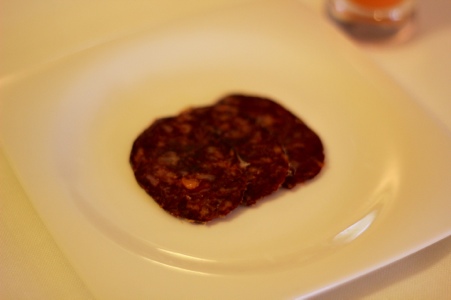
The carrot juice was a nice, herby and fresh palate cleanser, and was served alongside the house-cured chorizo, which was even denser and richer than the good Spanish chorizos abundant over here.
20120702-170759.jpg

20120702-170806.jpg

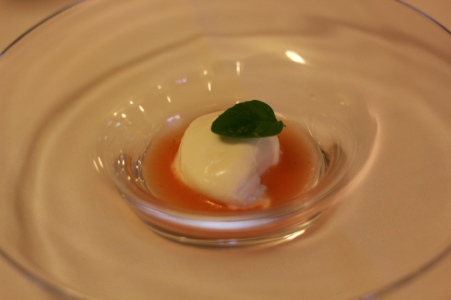
The mozzarella was rich, almost burrata-like, surrounded by what I will liken to a light, refreshing gazpacho. The smoke here was a subtle, fleeting taste, reminding you of hot coals below your feet (our dining room was above the grill, but you’d never know, as the restaurant harbors no smokiness – I suspect a great deal of thought was put into ventilation).
20120702-171437.jpg

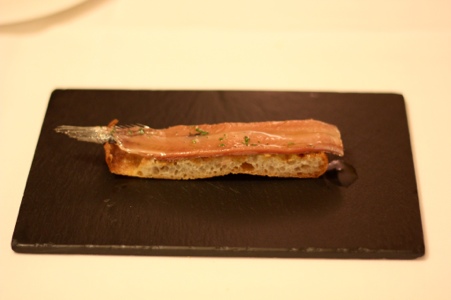
Anchovy? Yep, fresh, barely grilled and served with fire-baked bread. Here, the smoke was a bit more assertive because the anchovy could certainly take it. Lovely, and more than one step above the anchovy pintxos/tapas we have enjoyed on this trip.
20120702-171920.jpg

Here was a first for us. With a little instruction from the waitress (both, actually), we managed to expose the fleshy and lobster-like foot of the barnacle. Barnacle “juice” shot across my side of the tablecloth as I tried to extract the flesh that is covered by a fibrous sheath. These stains were to be joined later by stains from octopus “ink” and prawn bits. Seafood is deliciously messy, especially these barnacles. (I believe only geoduck remains on my “weird shellfish to try” list. Cool!)
20120702-172750.jpg

Grilled oysters, which I worried might be too much like the canned smoked oysters of cocktail party disrepute, were fantastic. A bit of smoke to heighten the sweetness of the fresh oyster, these were quivering, barely heated through and tasted pure, clean and of the sea just as they should. A bit of what I’ll describe as a roasted seaweed and an oyster foam rounded out the dish. The serving plates also merit mention (how often is that true?). Each ceramic serving plate is custom-fit to the oyster serving shell, with indentations designed to keep the shell from sliding off the plate. This suggests, of course, that the serving shell was not the original home of the particular oyster you are consuming, but it’s a thoughtful, unique and very practical approach to serving which the likes of me will never see again.

20120702-173439.jpg

Sweet, sweet Palamos prawns with a fair amount of smoke but plenty of freshness in them. Large and meaty, but not at all tough. We are on a definite roll here.

20120702-174129.jpg

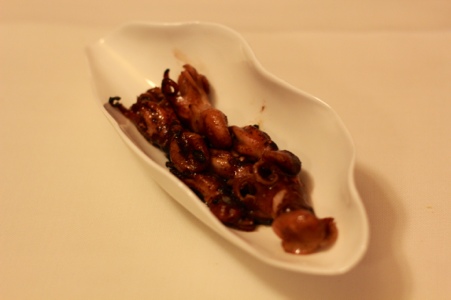
Baby octopus and baby squid are fairly common around here. The squid (chipirones) are often stuffed or served in their “tinta,” a sauce make from the squid ink. Octopus are most often fried. This dish confuses the two, and creates an octopus “ink” from the grill char. To say that this was the best octopus I have ever had is a silly and woefully inadequate platitude. It may be one of the best things I have ever put in my mouth. A combination of silky and firm textures, sweet and sea-salty flavors, all brought together with the powerfully smokey and rich sauce. Seriously good stuff; “last meal” sort of stuff.
20120702-175042.jpg

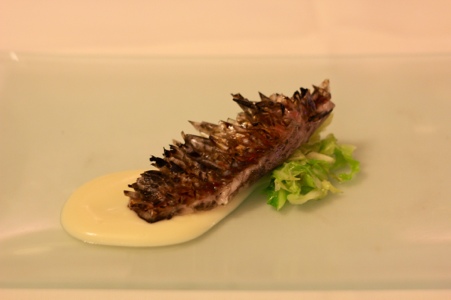
The red mullet was a nice fish course, but frankly, a bit of a way station between the octopus and…
20120702-175330.jpg

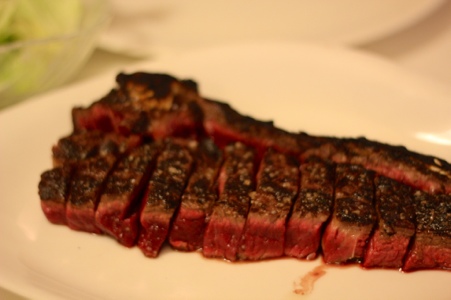
One of the best – top 3? top 1? – steaks ever. I always regretted never making it to Peter Luger while living in New York, though I had plenty of good expense-account beef while working there. I no longer have any such regrets, because I doubt even that esteemed chop house could have equalled this fusion of flesh, spice and smoke. I don’t know where this cow gazed, whether it was fed grain or grass, whether it was pumped full of hormones or whether it was given a massage in its final hours. I hope it lived well, of course, but I certainly know that it was put to exceedingly good use and treated with ultimate respect on the way to our plate. And one of the best signs that this course is worthy of distinction is the fact that every table seated within earshot of us, all Spaniards (with a couple of American guests), many apparently return customers, ordered this dish. Oh, why not: Best.Steak.Ever.
20120702-180748.jpg

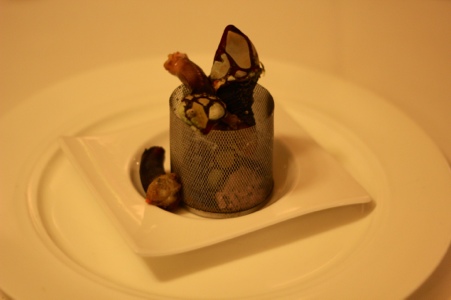
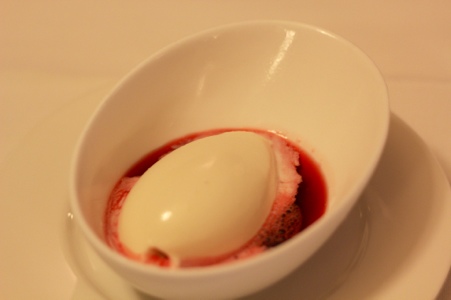
Yes, even dessert came from the grill. In this course, in the form of an ice cream made from milk reduced on the grill, allowing the milk itself to become infused with a sweet smokiness (and, in comparison to the assertive, spicy smoke of the beef, a clear example of the effect of the different types of woods and coals used). Rich, caramelized and very subtly smokey ice cream – who would have predicted that?
20120702-181205.jpg

Finally, another typical Spanish dish transformed. Flan, made from sheep’s milk (or maybe a goat/cow combination?), perfectly creamy and cooked so that it would have just enough structure to barely withstand gravity. Instead of being sweetened with caramel, the typical coating, it was simply dusted with confectioner’s sugar and accompanied by a few raspberries. A lovely and elegant finish.

20120702-181800.jpg

So did it live up to the high praise and our potentially-inflated expectations? Yes – perhaps not in the way that the experience of a French Laundry overwhelms you with it’s seamless flow and mastery of every single aspect of the restaurant – but with such dishes as the octopus and steak chop, it was simply unforgettable.

20120702-183640.jpg

Other items worth mention:

A single bottle of wine accompanied us along the way, a white Rioja blend from Remilluri. The name, year and blend all escape me right now.

At the end of lunch I worked up the courage to ask the (obviously Basque) waitress about my last name, which looks quite a bit like the names on the streets signs around here, and most likely originated in these hills. She was amused that a norteamericano would have such a name, and excitedly ran off to see if anyone might be able shed some light on the name’s meaning. Apparently, all the locals at the bar downstairs agreed that the name must be Basque, but had no idea what it might mean (which is the way I feel about almost all Basque words). A helpful hint to look on the Euskadi genealogical website leaves me homework for another day.

20120702-183736.jpg

Posted in Uncategorized | Leave a comment

Museums and performance art.

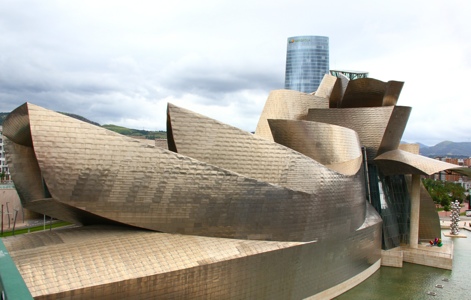
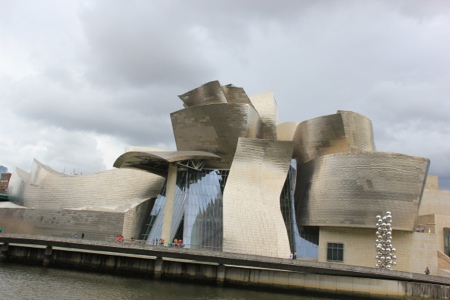
Two museums, equal in dignity, separated by 25,000 years and distinctly different architecture. The first, the Cuevas de Tito Bustillo, a cave formation containing some of the oldest art known to man. Famous for its representations of horses spanning several thousand years on a single wall, the art is housed some 200 meters below the earth’s surface in spectacular stalagtite-filled caverns. Why, and to some extent, how, these paintings and carvings are found in such a remote spot still confounds archeologists, but similar paintings from pre-history are found thought the region. A very strict no-photos policy means I’ll move on to the second museum to be visited that day, and a very photogenic one at that, the Guggenheim Bilbao. Housing some the most contemporary of artists and artistic forms, it could not have been more of a contrast from Tito Bustillo, and frankly, knowing the modern tools used and centuries of inspiration to be drawn from, much of the art lacked the impact of those crude ochre, violet and black cave drawings. The building, however, is rad.

20120701-120018.jpg

20120701-120027.jpg

20120701-120040.jpg

20120701-120205.jpg

20120701-120233.jpg

The acoustics are surprisingly good, as well.

20120701-120413.jpg

We consumed a lot of art in a single day, some of it quite literally. In the Basque region of Spain there is precious little difference between culinary and other performance arts, though the modern take on gastronomy is quite a bit easier to swallow than some of the Guggenheim’s exhibitions.

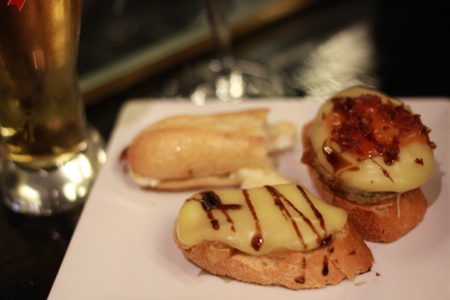
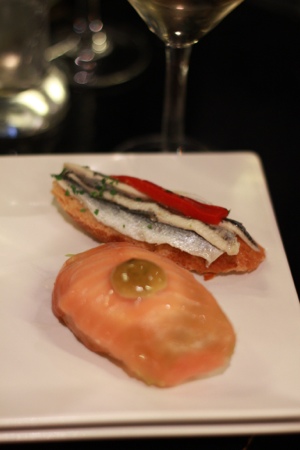
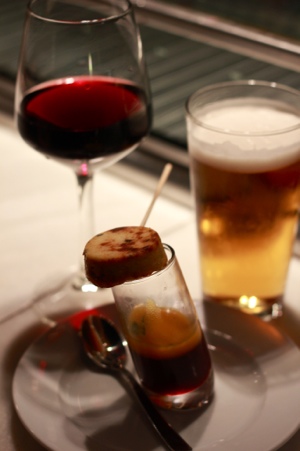
We had a “hit list” of four pintxos bars to visit, and visit we did. Sorry foodies, the bars were too bustling and we were enjoying ourselves too much to document it all here. There were plenty of classics, like grilled anchovies and various combinations with piquillo pepper, and some modern takes, like a soufflé lolli-pop. Just a couple of snapshots for now, because soon you Anthony Bourdain devotees will get your fill, as we get ours.

20120701-120528.jpg

20120701-120706.jpg

20120701-120805.jpg

Posted in Uncategorized | Leave a comment

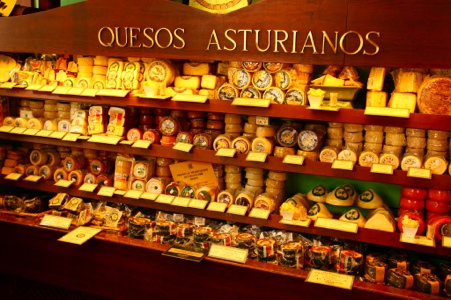
Warning: cheese porn

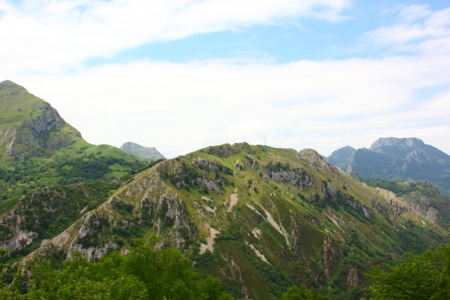
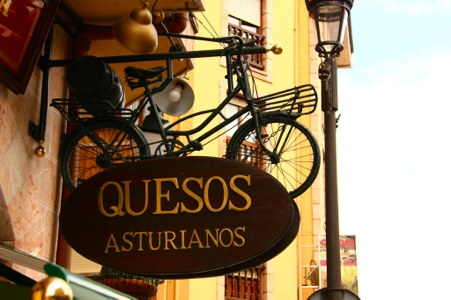
But first, this is not the Spain you are thinking of. This is a temperate Spain of steep mountains with tiny villages clinging to their sides. A Spain of green pastures filled with cows and sheep – the goats being left to roam the hillsides. A Spain of salmon runs, beans and hard apple cider. The Picos de Europa – Asturias.

20120629-091149.jpg

20120629-091216.jpg

20120629-091241.jpg

This is a Spain for cyclists: we saw as many today as we saw riding in the hills near El Escorial, and this area is both far cooler and far steeper. It’s a good thing there are opportunities to exercise, because this is cheese country.

20120629-091559.jpg

20120629-091612.jpg

Choose wisely.

20120629-091744.jpg

We selected examples of each of the three famous local cheeses: El Beyo (sheep), Gamonedo (sheep, cow and goat) and Cabrales (cow). El Beyo was dense, lovely, tangy and just-shy-of crumbly. Gamonedo (the local favorite) was born in the mountain meadows and aged in high, cool caves. Flecked with blue throughout the slightly irregular structure, it comes across as slightly smokey. Cabrales you may have had. Or at least like us, you thought you had. What they make and age here is nothing like what makes it past a port of entry into the U.S. This is a dangerous cheese – creamy, pungent and indulgent, yellow-tinged throughout, a little goes a very long way. The aroma makes you wary, but the finish is surprisingly balanced.

The Cabrales:

20120629-093156.jpg

And since local apples are traditionally served alongside, we opted for the liquid variety.

20120629-093323.jpg

The afternoon repast, with a view of the Sella river, and the wish that I had packed my bike.

20120629-093518.jpg

20120629-093540.jpg

Also, I should mention “fabada,” probably the most famous dish from the region, consisting of beans and a great deal of sausage, you might liken it to cassoulet. But I won’t discuss it further now for two reasons. First, the helpful clerk at the cheese shop had a look of horror when I suggested that we might partake of some for dinner – far too heavy for a nighttime meal she insisted, and besides is it started in the morning and meant to be consumed at midday, meaning we would likely only find leftovers. Second, beans just aren’t as sexy.

20120629-094122.jpg

Posted in Uncategorized | Leave a comment

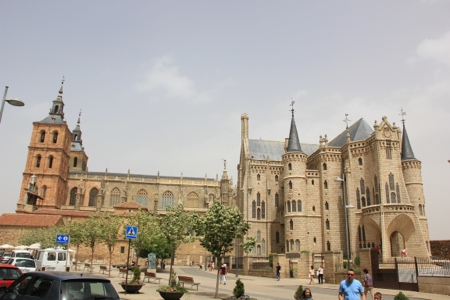
Want cathedrals, monasteries, convents and pilgrims?

Spain’s got ’em.

20120628-121634.jpg

20120628-121648.jpg

20120628-121658.jpg

20120628-121707.jpg

20120628-121715.jpg

20120628-121722.jpg

20120628-121729.jpg

20120628-121737.jpg

20120628-122045.jpg

20120628-122038.jpg

20120628-122117.jpg

20120628-122326.jpg

Posted in Uncategorized | Leave a comment

A few more, random, non-wine thoughts on Portugal

The last post was too winey, I know. But let’s just say we enjoyed the day.

Given the roads we had to drive and the speed at which they were driven, which was largely dictated by the ludicrous speeds attained by delivery vans, I am surprised that Portugal hasn’t sent more drivers to Formula 1. Really fantastic and harrowing driving. Just don’t plan on cycling in the Duoro – that would be suicidal.

The manor house where we stayed was populated by British, who are close enough to be able to make long weekends out of trips to the region. Lucky. The most notable British descendant, however was the English bulldog Molly, who coped with the 39 degrees C by wading in the swimming pool. Just like the rest of the Brits.

Award for best recycling of a port aging barrel goes to “sauna.”

20120627-114242.jpg

20120627-114426.jpg

Posted in Uncategorized | Leave a comment

“it’s a different reality,” she said.

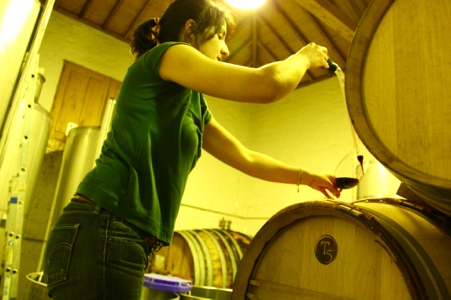
And she was right, of course. (“She” being the most gracious host at Quinta do Crasto.) Wine makers in Portugal face totally different economic, agricultural and regulatory environments than we might face at the western edge of the new world. But I think there are more similarities than might be evident at first glance. Wine makers in the Douro valley – at least those who we have met near Pinhao – are trying to both find an identity consonant with their heritage, as well as a way of expressing their place and wines in a modern way. Grapes In this region are most often relegated to Port. For lovers of fortified wine, this is a beautiful thing, and rightly so. But we (as many before us have already done) find such depth, enthusiasm and potential in the table wines of this area to recollect the potential realized two or three decades ago in my home town. (I would really like to stop the allusions and similes to California, but I simply cannot help it – this is the California of my youth: small roads, few tourists, ascendant wines yet unknown.) Blends have changed, viticultural techniques have changed and the idea of what it means to be from the Douro have changed. “Table” wines – non-fortified wines – from this region have a place in the future that should equal the prevalence of white Spanish wines from Penedes or Duero, while the red wines – at least the best of those tasted today – will certainly equal Rioja and the Rhone. Different stylistically and in terms of their ambition, perhaps, but equal in potential.

The whites of Quinta de la Rosa and Wine & Soul are reminiscent of our favorite Rhones: with a floral “head-fake” suggesting a semi-dryness that materializes instead in a wonderful, refreshing cleanness. And both they and Quinta do Crasto are making reds of such balance and elegance that one easily forgets the heavy, pedestrian and alcoholic reds for which Iberia was once known. I find it interesting that a wine region known for fortifying its wines to make a product that would survive the rigors of shipping is now, in its highest expression, banking the future on foreigners accepting and adopting the expression of this steep, terraced and hard-to-work land as something that should be enjoyed aside the finest meals and most-special of occasions. Personally, given what we have experienced over the last two days, I believe that the wines of the upper Douro are certainly worthwhile candidates for our next “special event” or even wine-versus-beer dinner.

20120626-120356.jpg

20120626-101902.jpg

20120626-101924.jpg

20120626-101914.jpg

20120626-120546.jpg

20120626-120622.jpg

Posted in Uncategorized | Leave a comment

Salamanca photos

.

20120624-224437.jpg

20120624-224459.jpg

20120624-224509.jpg

20120624-224526.jpg

20120624-224541.jpg

20120624-224547.jpg

20120624-224553.jpg

20120624-224604.jpg

20120624-224611.jpg

20120624-224631.jpg

20120624-224643.jpg

20120624-224653.jpg

20120624-224708.jpg

Posted in Uncategorized | Leave a comment

Salamanca sure is photogenic


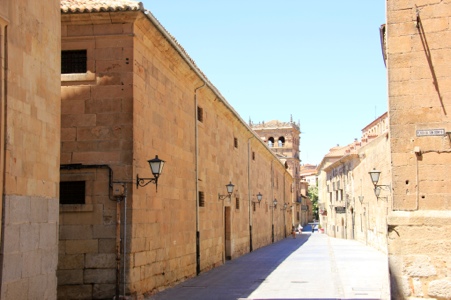
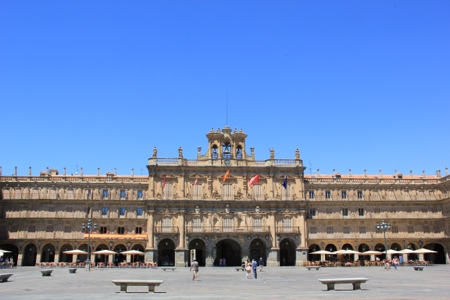
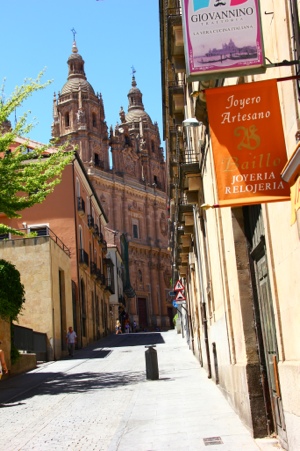
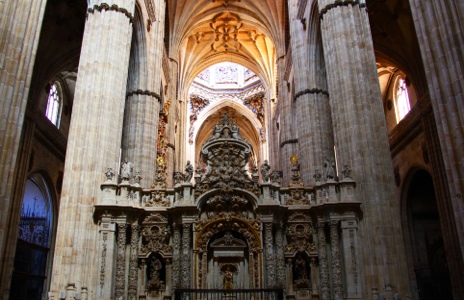
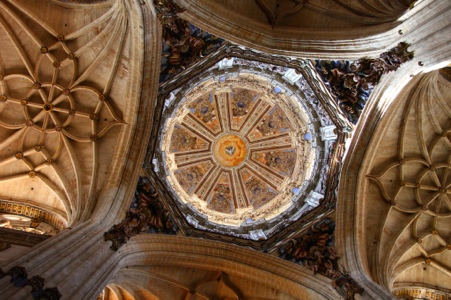
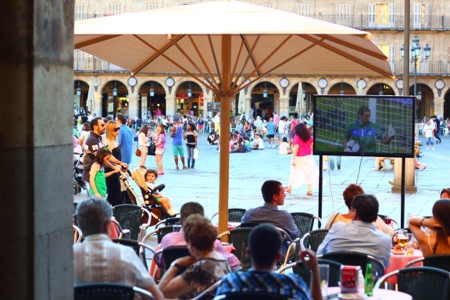
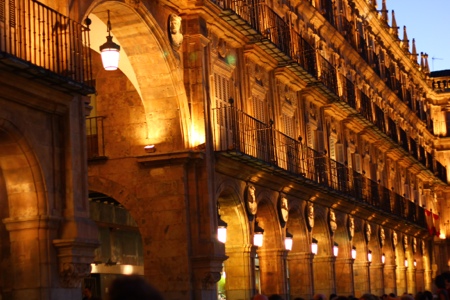
Recall when we said that Madrid didn’t seem “Spanish”?  We cured that completely today, via a GPS-enabled detour past the Escorial, through scenic rolling hills (which, frankly suggested to us that the Spanish, even if they had not been the first to arrive, still would have been the ones to settle in what became California) to the beautiful city of Salamanca, where the “new” cathedral dates to 1513. Grand plazas, stone streets lined with book shops supporting what was once considered the finest University in Europe (the Inquisition may have had an adverse effect on its reputation), and the kind of heat that justifies the siesta and an afternoon enjoying tapas in the Plaza Mayor.  Our hotel?  A 17th century convent, since remodeled. 
 
And – completely inadvertently – we happened upon a professional bicycle race (possibly the Spanish national championship), complete with scoring a sticky, discarded water bottle after rummaging in a bush. Free souvenir!  Result!
 
Photos forthcoming, once certain technical issues are resolved.
Posted in Uncategorized | Leave a comment

Greetings from Spain

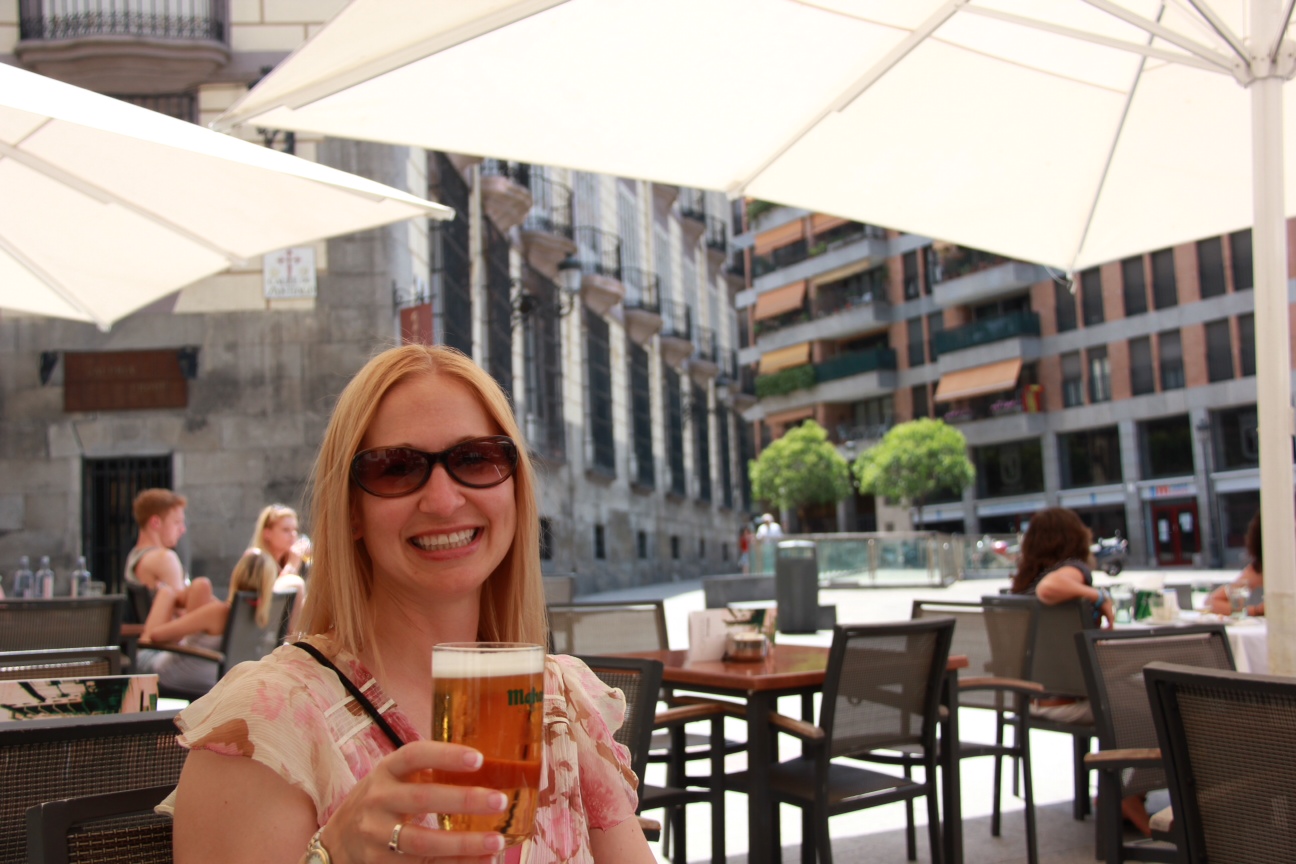
This is all my jet-lagged self was able to capture today. Maybe it’s all the summer tourists, but much of the afternoon wandering about Madrid could have easily passed for London, Munich or Stockholm. Of course, it could simply be the fact that cities this old have an appearance so distinct from our land that the concentrations of Germans and British wherever we visited simply overcame the “Spanish-ness” of the place.
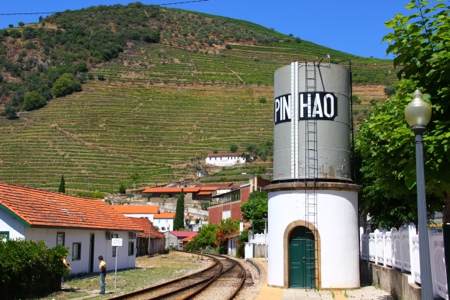
I suspect that we will remedy this by trip’s end.

-Al

Posted in Uncategorized | 2 Comments

Excellent video series describing the region and wines of Rioja.

Surprisingly, a very good balance of information versus propaganda:

http://www.ciaprochef.com/rioja/index.html

Posted in Uncategorized | Leave a comment