

Visiting wineries and wine tasting in Rioja can either be relaxed, personal and educational, or a more commoditized and tortured affair (much like it can be in other well-develop enoturism areas with a mix of large producers and small, family-run joints). We hit a mix of both. Partly because of a reliance on brand recognition and a navigable website, our first stop in Rioja was Marques de Riscal, a reliable producer with tons of experience with the typical tempranillo-based blends of the region. We knew that their exported wines were decent, and given that they had recently made a massive investment in a new visitor center, we hoped that they might provide a good introduction to the varietals, geography and practices of the region.

Hey, look! A Gehry!
With Riscal, we got a video introduction, a forced march with a dozen-or-so other folks, and more mentions of their spa than was fair. It did give me an appreciation of the scale required for the global marketing effort, though:
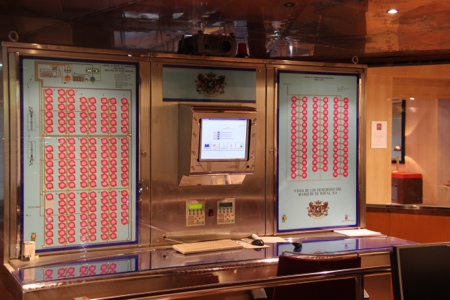
Uh, Houston, I think (hic…) we have a problem.
In the end, the wines they offered for tasting, their major-production crianzas, were fine and served to calibrate our palates for the next couple of stops. More on those stops in a minute, because first I should digress to talk about one of our activities while staying in San Sebastian a couple of days earlier: a wine-tasting class focused on the red wines of the Rioja region given at San Sebastian Foods. Our instructor did a very nice job focusing on the peculiarities of the region, both geographical and regulatory (like Duoro in Portugal, wine production here is tightly regulated by the local DOC), and in selecting the wines. I’ll just touch on one aspect here, and commend to the reader who is Interested in more information the video series that we blogged about previously. The DOC controls the maximal yields in the fields, but more immediately obvious to the consumer, also sets minimum requirements for barrel- and bottle-aging for the wines. Depending on the aging process, a wine may be labeled as a “joven,” “crianza,” “reserva” or “gran reserva,” in increasing order of age. In the US, I think I’ve only seen crianzas and reservas. But as we will see, these labels still leave a lot of room for wine makers to express their own styles and create products of varying quality.
Now, back to our tour. After calibrating our palates at Riscal, we hit our next stop, Roda.
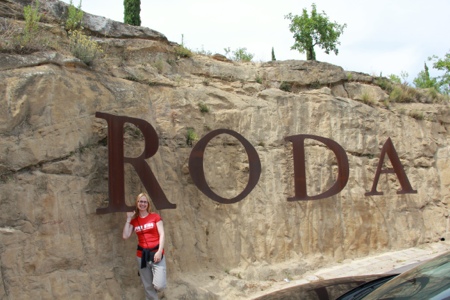
No tour here, just elegant wines in a stylish setting with a knowledgable representative. Along with the wines, we were served samples of their olive oils.
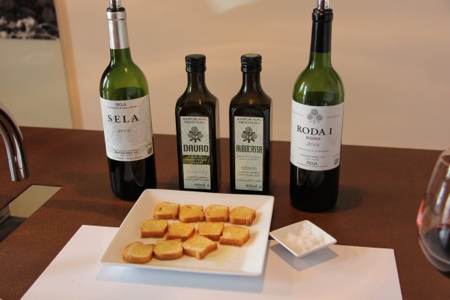
The each of the Rodas we sampled were nicely structured, lush, new-world wines, even at the lowest price point. We since have seen that they have achieved some good scores and reviews. Now, to see if we can find them anywhere in the US near the same price we were able to get at the winery.
After Roda, we stopped next door at Lopez de Heredia, a stalwart of Rioja, and aside from the decanter-shaped tasting room, one would not ascribe the term “new-world” to any aspect of their product.
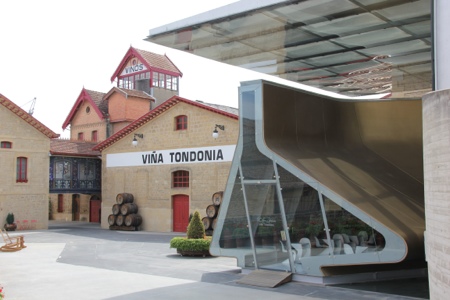
Proud of their complex wines, they are typically aged far beyond the required minimum. Where else would you go in 2012 and find that the most recent vintage white available for sample and purchase is from 2003, and the flagship white harkens from the 1990s? They are famous for having a deep cellar, with obvious patience to allow the wines to mature in the style that they wish. The winemaking and marketing are handled by two sisters of the family, and while you get the sense from the almost comical tasting room (sleek NYC lounge meets ticket counter to Hogwarts) that they might have divergent senses of style, I suspect that what’s in the bottle now and what they are saving until they deem it ready would have meet with their grandfather’s and great-grandfather’s approval.
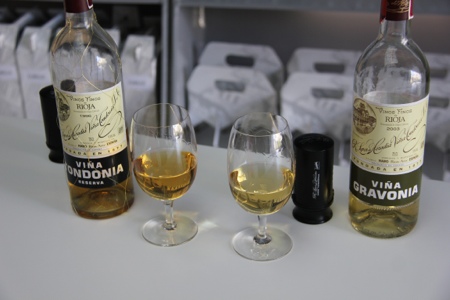
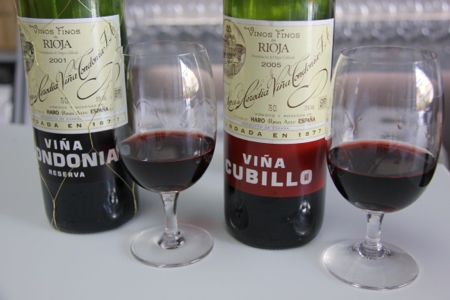
On an absolute lark, we made one final stop on this very same block, at a winery that we knew nothing about, and were not even sure was open to the public, Gomez Cruzado. We happened to time it well, since the manager had just finished a visit from a critic from Decanter magazine, and there were wines open to pour, and I believe she was in the mood for a little congratulatory tipple. With my courage up from a few ounces of wine, we engaged in a conversation – entirely in Spanish, to the amusement of Laura – about the wine business in the region and the challenges of importing to and competing in the US. Seems that some places that were founded in 1886 still had mortgages to pay. The wines themselves were deep, rich but plenty lively, a stark contrast with Lopez de Heredia, and much more in keeping with the style found at Roda. And here is where the crianza/reserva distinction is only helpful as a first approximation – the reserva from Heredia might as well have been a gran reserva, and the crianzas from each of these there wineries within 200 yards of one another were distinctive.

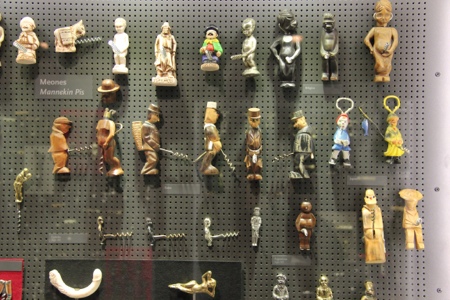
The next day, we began with a stop at the Museo de la cultura de vino, which I expected to be just a couple of rooms with little new information, and a way to kill time in the morning prior to our first appointment. Instead we were surprised by a huge collection of implements, multimedia presentations, and a good historical overview of wine making in the region. Laura has a strange affection for corkscrews, and the wine opener collection alone was worth the price of admission.

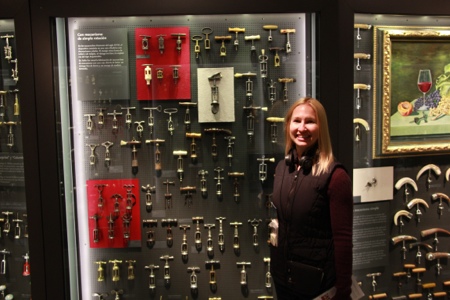

I found these more amusing than did Laura:
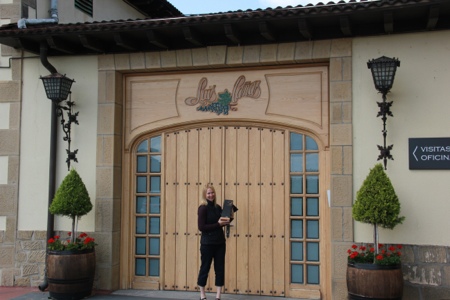
From the Museum, we headed to another winery about which we had read, but didn’t really know what to expect, Luis Canas. We were treated to one of the best tours/tastings of all time. With our knowledgeable, and fully fluent in English, guide, we explored the winery on a private tour and were able to see first-hand how these old wineries are applying science, technology and careful vinification practices to old vines. The results were phenomenal. Along the way, we had a chance to meet Sr. Canas himself, who at eighty-something looks fantastic – olives, red wine and working daily seems to be the key. Had I more courage, or better command of Spanish, I would have asked how he felt about the new practices and technology being employed, but I settled for demonstrating our enthusiasm for his product. Of course, we brought a bottle home, the 2005 “Family Selection” reserva, and though I’m sure it will last years in the cellar, I’m anxious to open it and give it another go. At some point we’ll research what is available back in the US, and maybe make a pitch to our local wine club to carry some of these wines.
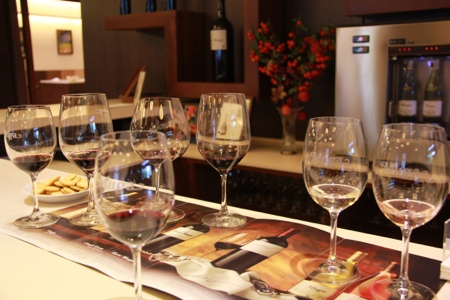
We then went back to the train station area of Haro to visit Muga. This was a CA-style stop, with an automatic pouring of seven wines and little interaction with the tasting room staff. They do offer tours, as well, so I won’t disparage them for the treatment, especially since we arrived very close to closing time, besides, we were unable to schedule stops at some of the other small wineries that we had contacted. To those used to Napa/Sonoma-style tasting, where wineries are open all day and one could easily stop at ten in a single day, especially if you are concentrating on a particular appellation, in this region of Spain most stops are by appointment only, and are offered only until early afternoon, requiring both advanced planning and judicious selection of visits. Haro is the closest thing to a centralized “wine town” that we found, but it follows the same siesta and late-dinner rules as much of the rest of Spain. As for the wines, no surprise, they were all quite good (with the possible exception of the joven, which I found too candied, but Laura enjoyed as “something different”). Their exported wines are clean and modern, not overly rich and a good representation of the area, but perhaps without quite as much character as some others we had tried.
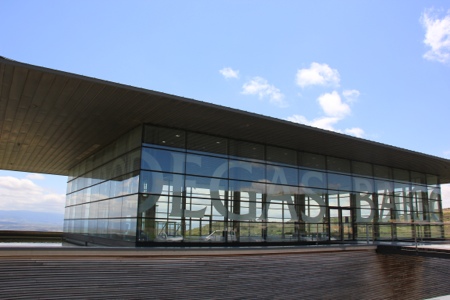
We tried to barge our way into one final winery that day: Bai Gori. We were encouraged to do so by our instructor in San Sebastian, who had worked here in the past, and by the awesome-looking, totally modern, not-wasting-the-view-at-all edifice. We were politely informed that without a reservation that it was impossible, but we somehow managed to get a glass of their crianza (we we had tried in the tasting in San Sebastian), and confirmed that it was a standout. They were rewarded for their hospitality by Laura’s purchase of a necklace in the gift shop. We’ll make a proper stop on our next trip.
The final stop, the next day as we headed south towards Madrid and our impending departure, was at David Moreno. Another old-style winery that is making new-style wines. A very nice stop, though a bit out of the way of the Haro-to-Logrono corridor where most wineries are found. There is a self-guided tour through the production facility and barrel room, followed by a tasting of just about anything they make, it seems. We took with us a nice Reserva, but it didn’t make it home – consumed with our final picnic of “banned” (in the US) cheese and pork products. That highlights one of the nice things about the Riojan grading system: that you can be fairly assured that a wine, though it may do well with additional aging, is ready to drink when released.


I found my barrel! But it was too big to check with our luggage, so I had to leave it behind…

 AlAndLaura